


How to protect the nature on Gavdos

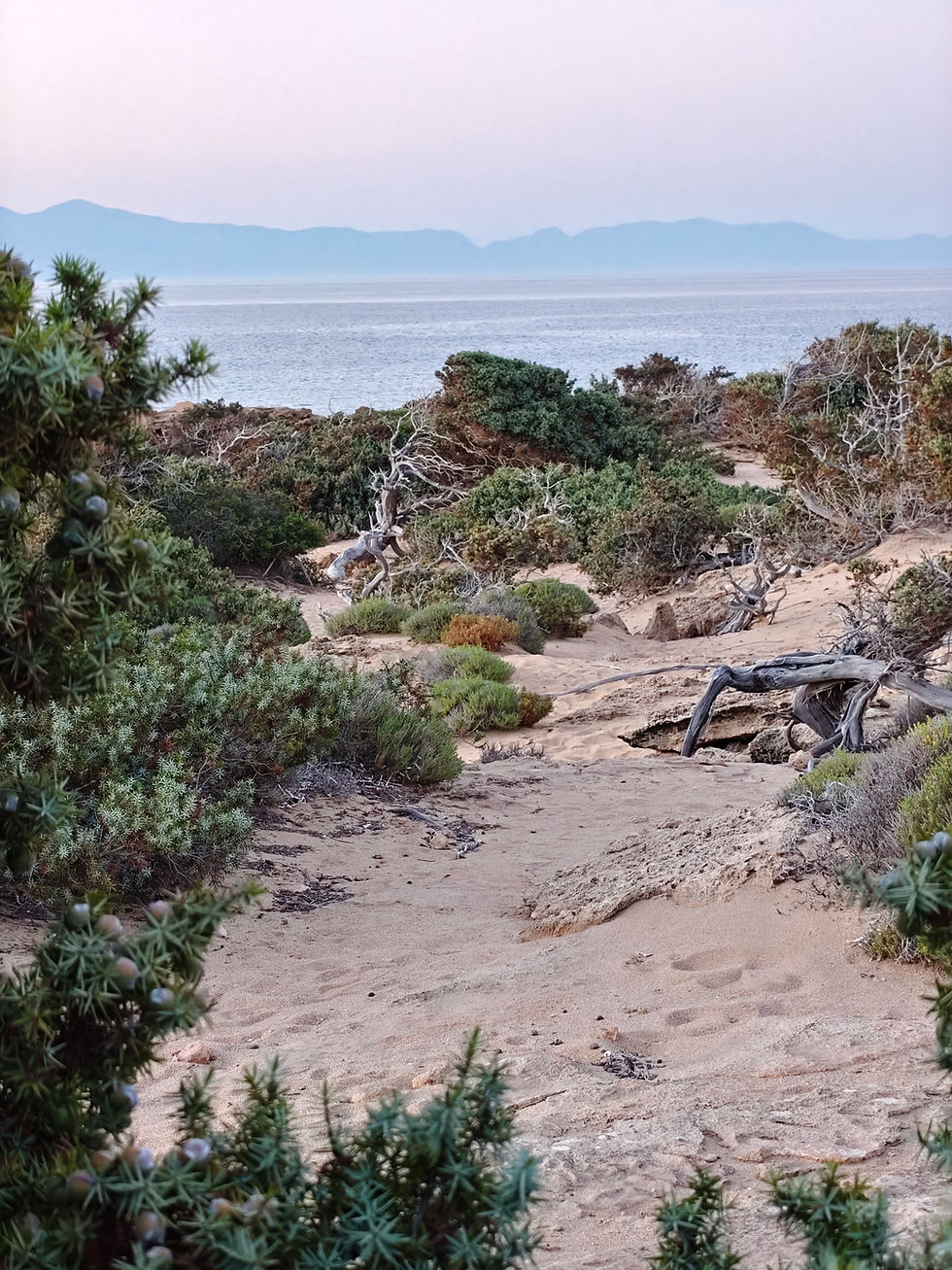
Gavdos is one of the last truly untouched places in Europe. Its wild beaches, ancient juniper forests and peaceful atmosphere make the island unlike anywhere else. Many of the island's juniper trees are several hundred years old. Every person who visits Gavdos becomes part of this unique environment for a short time. With that comes a responsibility. Together, we can help ensure that this extraordinary island remains just as beautiful, wild and unspoilt. Let’s work together to preserve the beauty and unspoilt nature of this wonderful place. The beauty and magic of this island deserves it.

Avoid Plastic Bags
Strong winds are part of everyday life on Gavdos. A plastic bag can quickly be carried across the island, ending up in the sea, caught in the juniper trees or scattered across the landscape. The bags often take on a life of their own and fly away before you even have a chance to react. Even on Gavdos, plastic bags are offered for even the smallest of purchases. Do the island a favour and use cloth bags or other carrying options wherever possible.
Camping responsibly
Camping is an important part of the Gavdos experience, but it also comes with responsibility. If you collect your rubbish in trash bags, make sure it is stored safely. Goats are curious and always hungry animals, and they often tear open bin bags in their search for food. Don’t underestimate goats. I’ve even seen goats use a human ladder to pull down a bin bag hanging high up in a tree. It’s best not to take any chances and to take your rubbish to the nearest bin every day.
Bins for Plastic bottles and cans
Over the last few years, recycling has become much easier on Gavdos. Special recycling containers for plastic bottles and aluminium cans have been installed at all major locations across the island.
Bring a reusable coffee cup
Let's be honest: one of the biggest sources of plastic waste in Greece is disposable coffee cups. The Greeks love their Freddo Espresso. The coffee cups, with their plastic lids, pile up by the stack. In summer, some cafés don't even serve coffee in mugs, but serve all their drinks in plastic cups. Unfortunately, these end up in the natural environment far too often. You can do your bit to help by buying your own reusable cup. You’ll find these reusable cups in several mini-markets on Gavdos too.
Safe water
Fresh water is one of Gavdos’s most precious resources. The island has long, dry summers, and every drop counts. Taking shorter showers, making sure taps are turned off completely, and avoiding unnecessary water use – these are simple ways to do your bit. In recent years, the island has already experienced water shortages, and the water supply has had to be cut off at certain times. This is a situation that should never arise.
Leave nature better than you found it
While exploring the island, you may occasionally come across a plastic bottle, a can or another piece of litter left behind by someone else. One of the main reasons why the island remains so clean is the dedication shown by visitors and residents alike to keeping it free of litter. If you see any trash, it doesn’t hurt to pick it up and dispose of it at the earliest opportunity. The island will be very greatful about it.
Respect the Ancient Juniper Trees
The ancient juniper trees are one of Gavdos' greatest natural treasures. Many of them are several hundred years old and grow incredibly slowly under the island's dry conditions.
Never break off branches, cut roots or damage the trees in any way. Even small injuries can destroy decades of natural growth. What may seem insignificant today could leave visible scars on these ancient trees for many years to come.
Never Light a Fire
Although the island appears surprisingly green during spring and early summer, the vegetation becomes extremely dry as the summer progresses. It often does not rain for several months, meaning even the smallest spark can quickly start a wildfire. Campfires, disposable barbecues and any unnecessary open flames should always be avoided. Cigarette butts should never be thrown into nature and must always be fully extinguished before being disposed of properly.


Comments